¶ Introduction
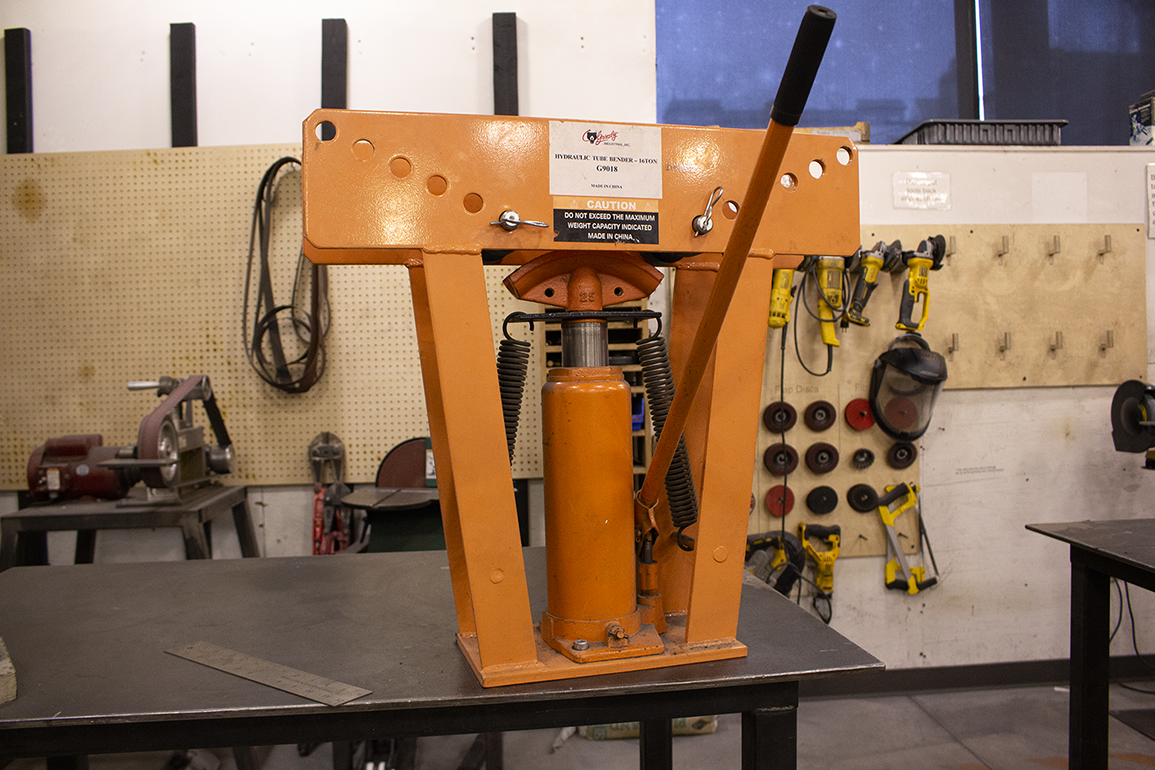
Open Works has several tube benders in different sizes, strengths, and types. All tube benders do what the name says: put a bend in a tube. The manual type uses a lever to wrap the tube around a form while the hydraulic type uses a piston to push a die against the tube in order to bend it.
¶ Shop Access
A membership or day pass is required to access [Shop Name](shop link)
The Shop Safety Class Metal 1: Shop Safety is required to access the Metal Shop. The hydraulic tube bender is not currently covered in a Shop Safety Class at Open Works. Check in with a Community Technician if you require training on the hydraulic tube bender.
¶ Machine Reservations
The tube benders do not require a machine reservation and are available on a first-come first-serve basis.
¶ Machines Available
- Hydraulic Tube Bender - 16ton (Model No. G9018)
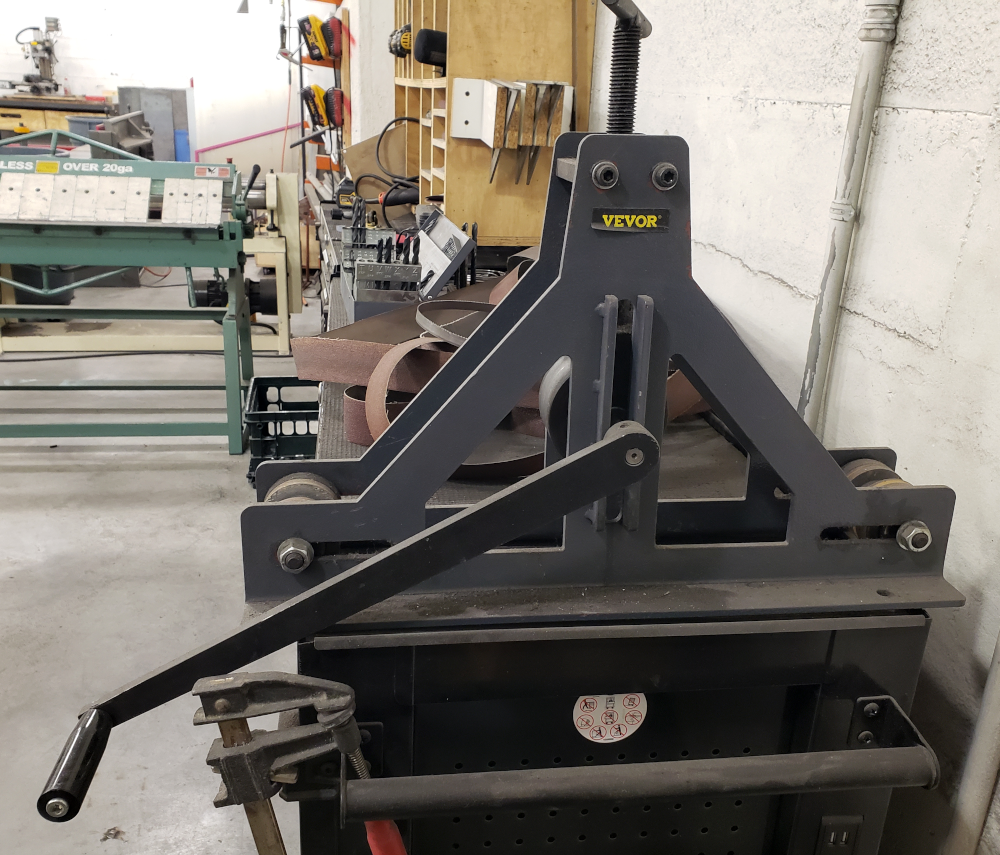
- manual tube bender - Vevor
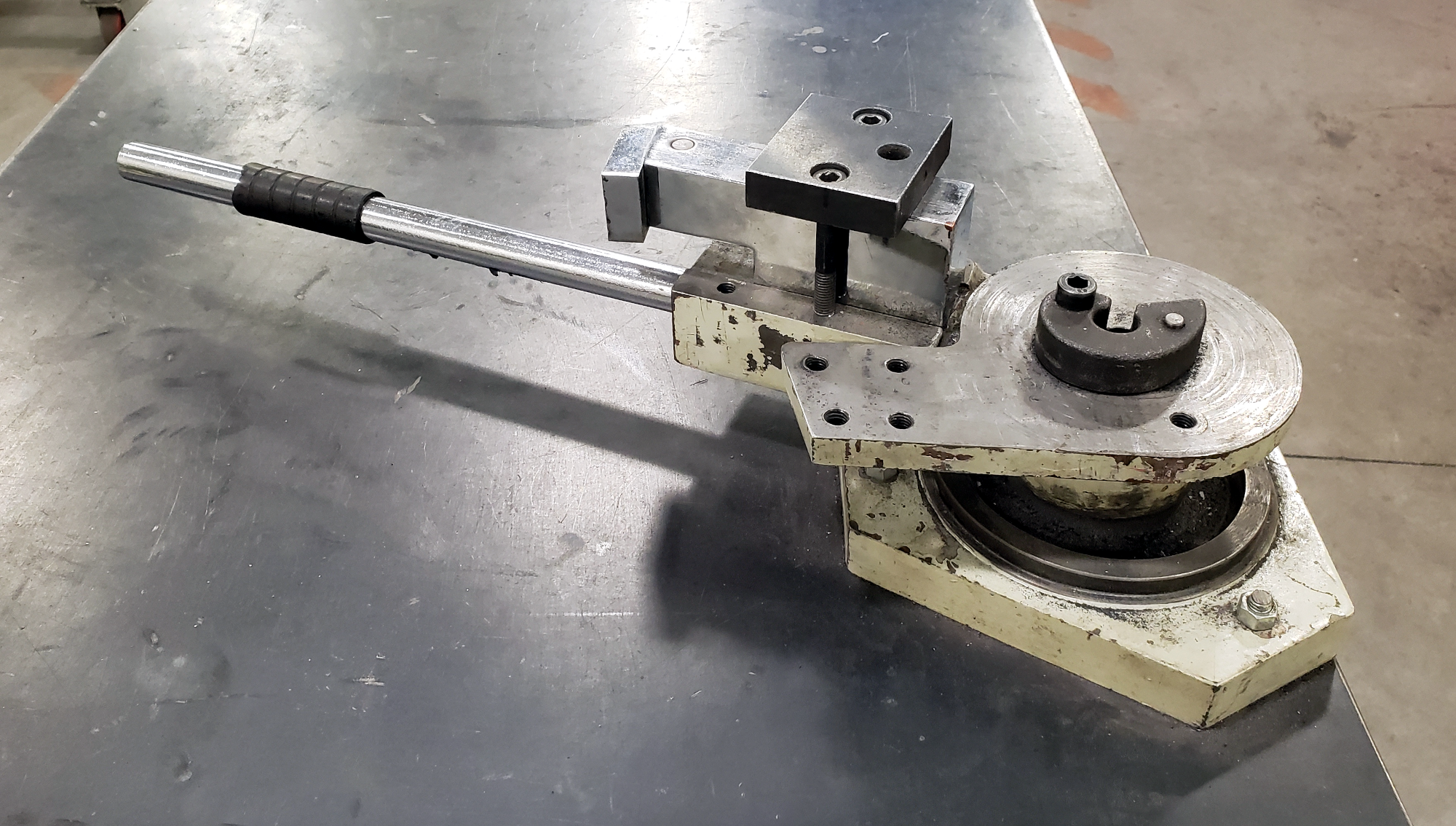
- manual tube bender (small)
¶ Machine Comparison Chart
| big manual bender | small manual bender | hydraulic bender |
|---|---|---|
 |
 |
|
| needs to be affixed to a bench before use | permanently mounted | needs to be affixed to a bench before use |
¶ Parts of the Machine
Click to expand
%%INSERT PICTURE¶ Material Considerations
¶ Acceptable Materials:
tube appropriately sized for the installed die
¶ Use with Caution and Proper Technique:
rods
¶ Forbidden Materials:
Everything else
¶ Safety
Personal Protective Equipment (PPE):
• Sturdy, close-toed shoes must be worn at all times. Leather steel-toed boots are recommended for any metal working.
• Long hair, jewelry, and loose clothing must be tied back.
• Safety glasses and earmuffs must be worn.
For more information on shop safety visit Metal Shop under "Safety."
¶ Step-by-Step Guides
¶ Before You Begin
The non-bench mounted benders require some setup if they are to be used on a workbench.
You can set them up on the floor and avoid lifting and dropped equipment risks.
These tools can be quite heavy. When lifting, use your knees and not your back. This means: keep your back straight and bend at the knees so that you can pick the tool straight up.
- Once the bender is on the workbench, it needs to be secured. Use C-clamps to secure the base of the tool to the top of the workbench.
- Lock the workbench casters.
Make sure that there is enough room for the full length of the material you are working with around the tube bender so that you can work safely and easily.
¶ Using the Machine
Tube benders use dies to define the the sharpness and total angle of the tube, and each tube diameter has a die matched to it.
- Find the die that most closely matches the diameter of the workpiece. It is okay if the total angle the die provides is greater than the total angle you want to achieve.
- Install the die into the bender. Most of them screw in.
Feed the tube into the bender. Where you want the "point" of the bend should be over the center of the die.
Use the lever or pump to operate the bender.
Look for bend relaxation- you may have to bend the workpiece further than the desired angle in order to achieve the desired amount of bend.
¶ Machine Maintenance
¶ Troubleshooting
¶ References
Model G9017/G9018 Hydraulic Tube Bender Instruction Sheet
¶ Video Walkthroughs
¶ Resupply Form
Click here to report any consumables needing to be replenished.
¶ Glossary
%%TERM
%%definition/description of term